Search This Blog

Showing posts with label Interesting Link. Show all posts

Wednesday, August 19, 2026

The opening line of Beowulf isn't actually confusing

 Hwæt wē Gār-Dena in gēardagum þēodcyninga þrym gefrūnon hū ða æþelingas ellen fremedon

The above is the Old English opening line for Beowulf.  There's been a lot of debate on how to translate the opening word "Hwaet".  This is ironic because "hwaet" is Old English for "what", so the question is, what's there to translate‽  Here's a straight translation without punctuation (though capitalization is added per modern convention).

What we have heard of the majesty of the Spear-Danes in days of old how the nobles performed acts of courage

The problem comes from punctuation that has been added by translators.  For Centuries, translators have added punctuation to that treats "Hwaet" as an interjection.

An interjection is a word or phrase that is grammatically independent from the words around it, and mainly expresses feeling rather than meaning. - Merriam-Webster

So, the punctuation typically breaks up the first line into two sentences, but that breakdown is the reason for the confusion.

Hwæt! Wē Gār-Dena in gēardagum, þēodcyninga, þrym gefrūnon, hū ða æþelingas ellen fremedon. 

There are huge debates on how to translate "Hwaet" as an interjection. Choices that have been made are "Lo!", "Listen!", "So,", "Hark!" and "Bro!", among many others. However, a plain reading the text reveals something that's typically missed in all of these debates.

"Hwaet" is not an interjection! It should be treated as an intensifying adverb.  It shouldn't be separately punctuated because it is grammatically necessary to the sentence.  The first line should just be:

"Hwæt wē Gār-Dena in gēardagum, þēodcyninga, þrym gefrūnon, hū ða æþelingas ellen fremedon." 

Or

"What we have heard of the majesty of the Spear-Danes in days of old, how the nobles performed acts of courage."

This restores a concept from the plain reading, that of parallelism between the two phrases with structures that utilize an intensifying adverb.  This is the raw poetry of the line.  In fact, if there are to be two sentences, the breakdown should be between these two phrases (which currently form a run-on sentence).

"What we have heard of the majesty of the Spear-Danes in days of old. How the nobles performed acts of courage."

However, from my perspective, there's another problem that now arises with modern translations.  That is, modern translations seem to treat Beowulf as story being told by a bard as some myth from long ago.  In my opinion, that's not how a plain reading of that first line introduces the story.

Let's try a literal-based (word-for-word) translation.

What we Spear-Danes in days-of-old of-people-kings majesty have-heard how the nobles courage performed

If we take "we" to be inclusive to an intended audience having some relationship with the Spear-Danes, then this isn't a bard's retelling of an old myth.  It could be the speaker including the audience in a story about a shared lineage.  Taking this into account may render the modern translation as follows:

What of the Spear-Danes in days of old, of the kings' majesty we have heard. How the nobles performed acts of courage.

By respecting the grammar of the original text (even without punctuation as guides), we actually may  discover a sentence that introduces a story as a matter of heritage, a claim of shared greatness from which the audience descends.  Such an introduction actually recontextualizes the entire surviving story of Beowulf.  This story regales the audience with great deeds of a shared history.

----

Sources:

Thursday, August 13, 2026

Adventure in Hobbiton

To travel to Hobbiton from Auckland requires a car rental or a tour bus, similar to our previous tour to Rotorua. My choice was the tour bus option. Unfortunately, the drive on the tour bus to Hobbiton was rather annoying due to another passenger who was a know-it-all that disrupted the tour guide's chatter with an endless series of inane questions (apparently, to which this person already knew most of the answers). Besides that, the Hobbiton tour itself was definitely a highlight of our New Zealand trip.

The day of our trip (December 13) was mostly sunny, which offered a spectacular backdrop for the tour. We got to see dozens of Hobbit homes. I love the Hobbit story, and the films, so this was a special treat. Many of the Hobbit homes were sized for forced perspective during filming, while many others were sized at nearly human scale for filming close-up shots with the actors.

We took a lot of photos. In some photos, we appeared slightly larger than a Hobbit would next to their home, but in other shots, we were giants. The Hobbiton tour guide was genuinely entertaining. He bared a striking similarity to David Tenet

The amount of detail for each home exterior is amazing. Even more detail was present in the Hobbit home interior that we also toured.

After the Hobbiton tour and return to our transport back to Auckland, we had one additional stop at the reservoir on Waikato River. Unfortunately, the ride back to Auckland was with that same know-it-all, but overall, the adventure was great!


Wednesday, December 03, 2025

New Zealand South and North Islands

December 3 - 15, 2025, with Allie (and sometimes her cousin) at Queenstown, Frankton, Queenstown Airport, Provenance Cafe, Frank's Eatery, Pantry By Frank's, Ma Boulangerie Bakery, New World Supermarket, Kawarau Bridge, Kawarau River, DoubleTree By Hilton, Water Taxi, The Lake Counter, Wakatipu Grill, Stacks Pub, Hilton Queenstown Resort, Queenstown Beach, Remarkable Gifts, Jellycat, DF Souvenirs, The Outpost Souvenirs, Global Culture, The Station, William Rees Statue, Finz, Real NZ Visitor Center, Anita Gelato, Skyline Gondola, StratosFare, Skyline, Kiwi Park, Mavora Lakes, Manapouri Community Hall, Lake Manapouri, Manapouri, Frasers Beach, Anduin River (Waiau River), Te Anau, Auckland, Auckland Airport, Auckland Harbour Bridge, Westhaven Marina, Auckland Zoo, Kingsland, St. Kevin's Arcade, Bestie Cafe, Myers Park, Four Points By Sheraton Auckland, Queen's Head, Sky Cafe, Sky Tower, Odettes Eatery, Typo, Market Square, Remarkable Gifts Auckland, The Christmas Heirloom Company, Auckland CBD, Oji Sushi, Origino Bistro, OK Gift Shop Auckland, Pier 11, Atrium On Takutai, Amano, Auckland Harbor, Mission Bay Beach, eSarn Wok Mission Bay Thai Eatery, Kapiti at Mission Bay, Mission Bay, Achilles Point, Robert Harris Cafe, Karapiro Dam, Hobbiton, Te Puia, Rotorua, Polynesian Spa, Sulphur Point, Lake Rotorua, Wai-O-Tapu Thermal Wonderland

Also see

Thursday, August 17, 2023

Tour of the Solar System News, from Mercury to outer limits of the Solar System

 Let's take another tour of the Solar System with current news about each of our major objects.

Mercury Dramatic Flyby Confirms That Mercury's Radioactive Aurora Touches the Ground, backup link and source material.

VenusThe Founder of OceanGate Wants to Send 1,000 People to Colonize Venus, backup link.

Earth Why Nasa is exploring the deepest oceans on Earth, backup link.

Mars Mars helicopter Ingenuity breaks 3-month flight gap with 53rd Red Planet hop. backup link.

Ceres The Dwarf Planet on Our Doorstep, backup link.

Jupiter James Webb Space Telescope sees Jupiter moons in a new light, backup link.

Saturn 100-year 'megastorms' on Saturn shower the ringed planet in ammonia rain, backup link.

Uranus NASA's New Horizons will investigate Uranus from the rear (Neptune, too). Here's how you can help, backup link.

NeptuneNeptune's Disappearing Clouds Linked to the Solar Cycle, backup link.

Pluto None Of Pluto's Five Moons Actually Orbit The Dwarf Planet, backup link.

Haumea NASA Studies Origins of ‘Weird’ Solar System Object: Dwarf Planet Haumea, backup link.

Makemake - The Dwarf Planet Named for an Easter Island Fertility God, backup link.

Eris -  Meet the Solar System's five, backup link.

Quaoar - Dwarf planet Quaoar has a ring instead of a moon, and scientists don't know why, backup link.

Orcus The Dwarf Planet Orcus, backup link.

Salacia As big as Ceres, but much farther away, backup link.

Gonggong - First dwarf planet in solar system named after Chinese mythical figure, backup link.

Sedna 2029 will be the perfect year to launch a mission to Sedna, backup link.

Sunday, January 01, 2023

Movies I watched in 2022

2022 isn't a full return to form for the movie industry, but it's a good few steps forward.  There was still a significant period of time where I just wasn't interested to see any movie in the theaters for weeks, if not months.  Overall, though, I saw quite a number of movies.  This won't be a review.  I'm just going to list what I saw with links for streaming if someone else wishes to see them now.

Saturday, July 30, 2022

George the Welder

On a whim, I decided to get myself Krispy Kreme today.  I drove to the one nearest to my home.  As I approached the entrance to KK, a mother opened to door for her young son while holding her baby and bady bag in her left arm.  Then she did something rather strange. While juggling her baby and baby bag, she actually attempted to hold the door open for me as well.  I was like "Thank you, but I should be holding the door for you" as we exchanged smiles.  I politely reached over her to hold the door for them, and then again for the inside door.  She then took her son to check out the donut making machinery while I went to the counter to order my donuts.  

I got a warm and gooey glazed donut, along with a raspberry-filled donut, and a milk.

As I left the counter with my order, I decided to sit in the dining area.  After quickly devouring my glazed donut, I then pulled my raspberry donut from the bag to eat it.  That's when I was approached by a tall man, a gentleman.  He was wearing a rather colorful and intricately patterned shirt.  His hair and beard were long long since white, his face weathered, his stance slightly crouched, and his demeanor friendly.  I hadn't noticed at first though.  My face was down in my phone, playing a tired but engaging game.  

This gentleman approached me and got my attention by mentioning the fact that we were both eating raspberry-filled donuts.  He then asked me if I fish or hunt.  "I don't."  He asked how long I've in Colorado. "It's been a few years.  How about you?" I asked with expressive interest.

This sparked a conversation that lead to him asking if it OK to sit down at my table.  "Of course!" Our conversation continued.  He asked,  "what do you do for work?"  I replied with "software design", knowing full-well he wouldn't have the first clue what that is.  However, I answer this sort of question forthrightly and directly as a matter of respect.  As expected, he didn't know how to progress with that topic, so he just took the opportunity he needed to talk about his life, his father and family.

As we talked, I caught a glimpse of the mother as she was grabbing a table for her family. She give me knowing expression, like she briefly sympathized with me for getting roped into my situation.

Well, it turns out this gentleman has seen a few things in his long 88 years.  He has a sister that is 94. He moved to Colorado in the 50's from Chicago.  He was a welder.  He was in the Air Force, though I'm not sure if he was a welder in the Air Force, or not.  He mentioned how he was on the basketball team for the Air Force that won a championship.  I inquired about this further, thinking he might be someone I could look up later.  However, it turns out it was a league made up of the various squadrons, not college.  His team was the only team to have a black player.  It's my impression that he felt the need to make an excuse for this fact by saying the black guy was the only other member of his squadron willing to do the required daily run of four miles.  If so, it's interesting that he felt the need to make such an excuse. He was clearly proud that he was a part of the championship team.  I'm guessing that others at the time felt like his team cheated by accepting a black guy in the team?  However, my impression could be wrong; maybe he had other reasons for mentioning this fact in this manner.  Either way, this makes me question, what excuses am I making now for something that will be perfectly normal in 30 years?  

He talked about his time at Rocky Flats (backup link) working on equipment for the production of nuclear bomb triggers, I presume as a welder. This was his segue to discuss a particular incident that lead to multiple diseases that he now suffers.  I'm not going to talk about specifics of the incident or his resultant diseases, other than to say some incidents at that site are public knowledge and can be read about separately.  However, hearing his first hand account solidifies concerns over the defunct Rocky Flats facility.

We talked about other things too, but I did more asking than telling because I can see he was man facing his own mortality and seeking to share his experiences.  He just needs someone to listen.

His name is George.

Thursday, March 31, 2022

Letter (at least some) that we should think about restoring to English

Eight years ago, I wrote an article about the letter thorn, that used to be used in English to represent TH sound.  Before that, I wrote about even more common sounds in English that aren't represented by English letters. Well, a few years ago, Austin McConnell also covered this topic in his video 10 Letters We Dropped From The Alphabet. In particular, my mind was blown at learning the origin for the name of "&".


Out of all these letters, I think we'd benefit from the restoration of thorn, and maybe some modification thereof so that the voiced and unvoiced TH sounds can both be represented.  (Much like Austin, I'm not a fan of eth.)

Thursday, December 16, 2021

Telegram is still a thing, and it's an interesting holdover

I recently made a Facebook post about the pager network.  I pointed out that the Flex and reFlex protocols used by the pager network will still be running long after 2G, 3G and 4G are gone. (See below for the sunset schedule.)  It's weird that this old 90's tech will still be in operation after several generations of the cellular network are gone.  (See Old School: Pager Code for look-a-like codes and Beep Codes list for common standard 3 digit codes.)

What's weirder than that?  Telegraph networks are still operating.  That means a system originally started in 1840's will outlast several generations of the cellular network!  Wow!

Now, I must admit that I recently discovered telegrams are still a thing in the 21st Century from a Youtube video.


So, you know what I did?  I sent a xmas message via telegram to my friend.  And, I learned a few things about the process along the way.  Despite operating completely through a website (as all things must), it appears the process still has manual nuances.  For example, any type of special instructions must be typed into the either the address field or other special field, in specific ways.  There's no website checkboxes for many types of instructions, such as stating a delivery date or specifying to only deliver to the addressee.

My friend's telegram was sent by me in November, and slated for delivery yesterday.  However, it appears to have been delivered a day late.  I guess there's numerous possible reasons for the one day delay.  Either way, my friend is very delighted by this unique gift (well, unique for the 21st Century).  

Now, I didn't use iTelegram, which apparently is the successor to Western Union's telegraph service.  I think if I need to send a telegram as a legal document in the future, I would use iTelegram since they provide substantial proof of delivery.

In other news,

Upcoming cellular network sunsets from T-Mobile (some of these services have already been shut down by other carriers): [Edit: this schedule is outdated, as end dates have been pushed out.]

  • 2G was already dropped most major services some time ago, but still hangs on with T-Mobile.  They'll be shutting it down in 2023.
  • 3G is actually getting shut down before 2G, at the end of 2021.
  • 4G is also getting shut down before 4G, sometime during 2022.

Thursday, October 28, 2021

A wikipedia article all grown up: Brine Pools

I was watching some nature show back in the mid-aughts that covered the topic of the ocean floor.  This show mentioned the geological formation called brine pool.  Brine pools are amazing "lakes" of brine at the bottom of the ocean.  The water of a brine pool is separated from the ocean above due to the pool's extreme salinity.  Brine pools even have their own surface upon which objects can float.  Imagine this: a submarine floating on top of a brine pool at the bottom of the ocean.

So, why all this talk about brine pools now?  Well, at that time, I was interested to learn more about them.  Upon searching the topic on the Internet, I found nearly nothing.  Wikipedia didn't even have an article about brine pools.  That means it was up to me to create the article.  The only thing I had to go on was what I remembered from the nature show.  So, all I could say was this:

"Brine pools have been discovered at on the ocean floor near methane vents. Lifeforms around these pools do not depend on the sun for energy."

That's it.  That was the whole article.  It's dangerous (metaphorically) to add articles to Wikipedia.  Wikipedia is a vicious and uncaring environment with nearly draconian rules about what can stay and what must be removed.  It's doubly risky (again, metaphorically) to create an article with only one sentence for a topic that isn't well know.  The final risk is posting such an article without any citations.  

By some miracle, the brine pool Wikipedia article grew.  This happened due to other editors adding more detail and cited sources.  Images were added soon after.  I kept an eye on the article and helped edit it further from time to time until late 2010.  At that time, the article grew to include a couple of images and three subheadings, each with a short paragraph.  By the Wikipedia measure, it was "2,960 bytes".  


2010 is around the time I stopped editing on Wikipedia in general, but for no other reason than I just got too busy.  So, I forgot about this little article over time.  It wasn't forgotten by others, though.  The article had a moderate number of edits between 2010 and 2017.  Its size grew to a modest 3,410 bytes by the middle of 2018.  

In August of 2018, according to the article's history, something weird happened.  An anonymous editor added a new subheading with a rather large paragraph.  The problem with this edit was that the subject of the subheading had nothing to do with brine pools, but was actually about the land formation of artificial brine sinks.  The edit appears to have been made in good faith by someone who did not understand the topic of brine pools.  After some back-and-forth edits, the incorrect subheading was removed by other editors.  After that, edits to the article went quiet until September last year.

It appears that someone familiar with the topic of brine pools added a ton of detail in Fall of 2020.  Edits by others quickly followed.  The article ballooned to 10,269 bytes, then again to 21,471 bytes.  Over the past year, the article has received regular and quality edits.  It's turned into a good article about the subject.  The current version of the article is 28,184 bytes with five well flushed-out subheadings and tons of cited sources.  Of course, a lot new information has been discovered about brine pools in the past 15 years, which may have something to do with the explosion of information added to the article.  Most of the cited scientific studies were published since the inception of the brine pool article.

How did I suddenly remember this little article that could?  Literally yesterday, a related geological formation, called cold seep, showed up in a news feed.  Cold seeps are associated with one of the three methods that form brine pools.  So, I was reminded about the article I created all those years ago.  I checked out the brine pool article, and it is glorious (hyperbole, of course).  

I'm glad I was able to contribute in some small way to the dissemination of scientific knowledge.  I've created many other Wikipedia articles, but this one seems to be the most impactful.

One side note, I've actually referenced Wikipedia a lot over the years!  Check out this search: Wikipedia search.

Friday, May 15, 2020

Of Wolves and Rocks (Part 4)

Even with the current world crisis, and the lack of things to do regardless of where you might go, it was great being able to stay in the Colorado Springs area to see the wolves at the Colorado Wolf and Wildlife Center.  It was also great to explore the Garden of the Gods for an afternoon.  That said, our original plans included a bit more.  There are still places to explore.  We'll be back.


Places we missed this time due to covid-time, that we'll try to do next time we are in the area:

Friday, January 24, 2020

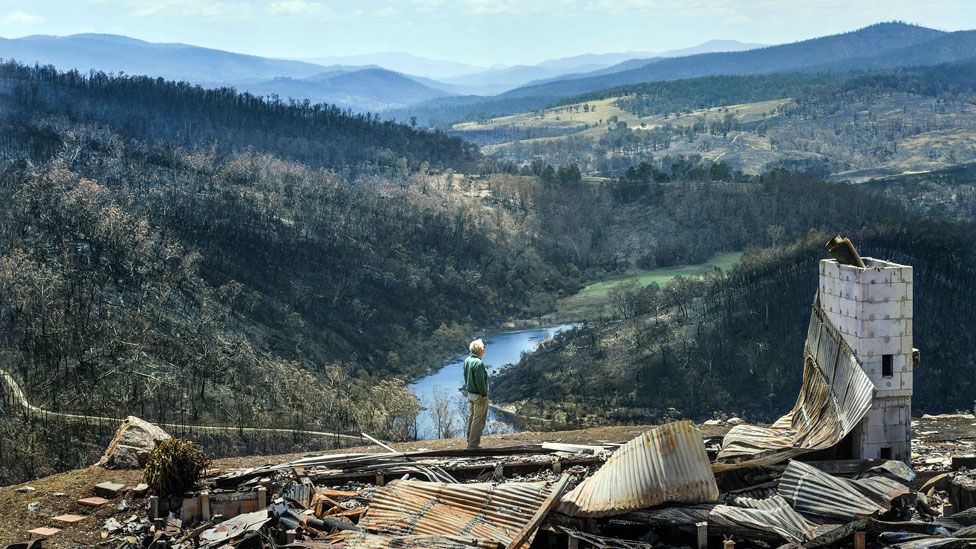
Australian bush fire crisis isn't over by a long ways

As a reminder, the fire crisis in Australia isn't over by a long ways. (https://www.bbc.com/news/world-australia-50951043)

Two organizations to which I've donated are Wires (https://www.wires.org.au/) for the animals and St. Vincent de Paul Society (https://www.vinnies.org.au) to help humans victims. It's my understanding that both organizations are applying donations directly to current relief efforts (if you choose the correct link on their websites).

There are also suggestions to donate to Red Cross and other similar organizations. This is also important because they respond to disasters. However, please realize that such donations are typically applied to their general fund and may or may not be applied to current relief operations. If you wish to donate to these, please do so at regular intervals as a separate donation to allow those organizations to continue to respond to future disasters.


Wednesday, March 08, 2017

Is it really Frankenstein's Monster?

Frankenstein comicIs the term really "Frankenstein's Monster" rather than just "Frankenstein" when talking about the monster?  How often has the term "Frankenstein's Monster" really appeared anywhere?   Why is there confusion about the monster's name?  Well, that's because he isn't actually given a proper name in the original story by Mary Shelley.

Without much context, a quick search on Google ngram reveals that the term "Frankenstein's Monster" does indeed show up in literature.  However, going back to 1800 finds that the term really didn't get started until well after 1870. Beyond that, the term wasn't really in use until the 1960's. Just for reference, the Frankenstein book was originally published in 1818.


So, what do we get when we compare the usage of the term "Frankenstein's Monster" with usage of just the name "Frankenstein"?


Well, usage of "Frankenstein" does occur well before 1818.  That makes sense since it is a real surname.  However, taking pre-1818 use of the name as noise, there is still substantial use of the term "Frankenstein" from 1818 and on.  "Frankenstein" appears so often that it literally relegates the use of "Frankenstein's Monster" to well below that of background noise.  Usage of "Frankenstein's Monster" is less than a blip, even nowadays.

Beyond that, is the distinction between the mad scientist and his monster really all that important, namewise?  If we count the monster as the scientist's child in a manner of speaking, the monster would carry the scientist's surname anyway.  Both the monster and the scientist carry the name "Frankenstein".  Maybe instead of trying to impose a ill-accepted term like "Frankenstein's Monster", we simply use the term "Dr. Frankenstein" for the mad scientist and "Frankenstein" for the monster.


"Dr. Frankenstein" appears orders-of-magnitude more often than "Frankenstein's Monster".  And, it's a bit more of a blip when compared to just "Frankenstein".


Monday, January 30, 2017

Maybe we are the first

I've said several times that it is possible that the human species is the first species in the Milky Way galaxy to evolve to our level of intelligence and technology.  This opinion is based on information about just how much needs to happen to allow for the spark of life in conjunction with the apparent rarity of our own solar system.  The recent study Relative likelihood for life as a function of cosmic time seems to confirm this idea.

A basic premise is that life requires stars for two different purposes.  The study states,
Life requires stars for two reasons. Stars are needed to produce the heavy elements (carbon, oxygen and so on, up to iron) out of which rocky planets and the molecules of life are made. Stars also provide a heat source for powering the chemistry of life on the surface of their planets.[001]
This means that rogue planets aren't likely to spark or support life.  This also means that Population III and most Population II stars systems will not have life either, because they are unlikely to have the elements necessary to form terrestrial planets.  That pretty much leaves us with Population I stars.

Rogue Planet - artist concept
Rogue planet, artist concept
Population III or II stars, article concept
Population III or II stars, artist concept
What's all this about "Population"? It's a name for stars at various stages of galaxy development.  
  • Population III stars are the stars that likely formed right after the Big Bang.  They have not been directly observed in our Galaxy, so their existence is estimated.  They were made up of mostly Hydrogen and Helium.  As such, they are unlikely to have any planets.
  • Population II stars are stars that are still made up of mostly Hydrogen and Helium, but have higher concentrations of elements such as Oxygen, Silicon, Neon, etc.  Typically, such star systems are still unlikely to contain terrestrial planets.  Many Population II stars still exist in our galaxy, though in regions without access to many heavier elements.
  • Population I stars are stars that are yet again still made up of mostly Hydrogen and Helium, but have much higher concentrations of the more stable element Iron and other heavy elements.  Population I star systems are much more likely to contain terrestrial planets.  The Sun (Sol) is a Population I star.
Why is this discussion about "Populations" important to the discussion about the arrival of human-like intelligence?  At the risk of oversimplifying this a bit, I'll state that Population III stars lead to the formation of Population II stars, and Population II stars lead to the formation of Population I stars.  As each generation of stars lived out their lifespans, they made way for the next generation to arise.  Population I stars could not have formed 13.5B years ago; there weren't enough heavy elements around.  Just as today, it is extremely unlikely that Population III stars could arise now; there's too much heavy elements around.

Life is very unlikely to have occurred until Population I stars formed and supported terrestrial planets.  Terrestrial planets in the Goldilocks Zone around their star then had to have the necessary events and composition to allow for the spark of life to occur, and subsequently support life until species of higher intelligence evolve.


Is Earth ahead of the curve for the development of life?

The previously mentioned study suggests that Earth may have developed life to the human-level a bit earlier than average.  The study concludes that, "life around low mass stars in the distant future is much more likely than terrestrial life around the Sun today."[001]  Life throughout the galaxy may be far more common billions of years from now than it is today.  That also means that there may not be any/many other alien species with which we can contact and interact right now.  The study puts our odds at 0.1%.[001]

This could explain why we've not seen evidence of extraterrestrial intelligent life in our galaxy.  Maybe we are among the very first. Others like us are so rare, we will not be able to contact each other.

Maybe a billion years from now, a future intelligent species will evolve on some future (yet to exist) world, and when they point radio telescopes into their  night sky, they receive a song of hundreds of thousands radio signals from just as many other civilizations.  Maybe, if our species is able to continue evolving, our long-from-now-posterity becomes the evil invaders of other worlds, rather than our world being the one constantly invaded, as Hollywood would have us imagine.  Maybe we are the monsters in waiting.

Response:
Facebook1 and Facebook2
reddit

Article Series:

Monday, January 23, 2017

"Goldilocks zone of metallicity" on a galactic scale

What does the night sky look like to a planet within the Galactic Bulge?  Cool Cosmos describes it as,
Stars in the Galactic Center are so concentrated that they typically are only a few light weeks away from each other. In contrast, our local neighborhood of stars are separated from one another by light years. If we found ourselves on a planet near the Galactic Center, our nighttime sky would light up in a blazing display every night, filled with stars as bright as the planet Venus looks to us.[001]
However, would there be a habitable planet from which to see this sight?  Is it possible to have life-supporting planets near the Galaxy's center?

The concept of Habitable Zones around stars has been studied for a couple of decades.  Life similar to ours can only exist on planets that are a certain distance from their sun.  This is due to the amount of energy from the sun that is received by the planet.  Too much energy, the planet is too hot.  Too little energy, the planet is too cold, hence the Goldilocks reference.

There's another type of Habitable Zone at the galactic scale which uses a somewhat different set of criteria.  Solar systems which have planets that can support life must themselves be made from material that has a lot of elements that are heavier than Helium.  In astronomy, elements heavier than Helium are often referred to as metals.  Metal content of a star is called its metallicity.  The danger is that is if a solar system is made from material that is too rich in metallicity, Earth-sized planets may not be able to exist due to the likelihood of much larger (heavier) worlds displacing those Earth-size planets.  Hence, "Goldilock zone of metallicity" is the idea that certain regions of a galaxy may be too metal-rich and other regions may be metal-poor in order to allow for the presence of Earth-like worlds.[002]

It's not just the metals

Metallicity is not the only factor, however.
Early intense star formation toward the inner Galaxy provided the heavy elements necessary for life, but the supernova frequency remained dangerously high there for several billion years.[002]
If a solar system is too close to the galactic core, the intense supernova frequency in a young galaxy might've keep many worlds from supporting life.  This is because they would have experienced numerous blast waves, cosmic rays, gamma rays and x-rays that are fatal to lifeforms.[002]  As the collective of solar systems age and die, they would have contributed to increasing metallicity.  This means, the right conditions for life on Earth-like planets may have never happened near the galactic core.  Stars that are too close to the galactic core never had and never will have the right conditions to support Earth-like worlds with Earth-like life.

Where can solar systems with habitable planets reside within the Milky Way?  According to the study The Galactic Habitable Zone and the Age Distribution of Complex Life in the Milky Way, the inner bulge component, diffuse halo component, and a thick disk component of our Milky Way Galaxy would not likely allow for Earth-size planets to exist within the right timeframe.[002]  So, the Habitable Zone of our Milky Way Galaxy isn't even really based on distance from the galactic core.  It's a somewhat washer-shape region in between all the places that Earth-sized planets cannot exist within solar systems.

Current Habitable Zone of Milky Way 

Given all of these factors, the authors of the study The Galactic Habitable Zone and the Age Distribution of Complex Life in the Milky Way state,
We identified the Galactic habitable zone (GHZ) as an annular region between 7 and 9 kiloparsecs from the Galactic center that widens with time and is composed of stars that formed between 8 and 4 billion years ago.[002]
Galactic layout © Matthew Lorono 2016

Knowing our Milky Way's Habitable Zone helps us in the search for life on other worlds.  We can focus more efforts on this space.  This isn't to say that this is the only space where life can and does reside.  The Galactic Habitable Zone is just our safest bet for finding evidence of life.

Primary reference:
C. H. Lineweaver,Y. Fenner, B. K. Gibson, Science 303:59–62, DOI: 10.1126/science.1092322, The galactic habitable zone and the age distribution of complex life in the Milky Way

Response:
Twitter
Facebook 1
Facebook 2
reddit
meneame

Article Series: