Search This Blog

Showing posts with label About Me. Show all posts

Sunday, August 04, 2024

Welp, two more states I've visited

I've been able to visit two more states. I've added no countries or Canadian provinces, however.  I hoped to get one other state before this update, but that wasn't meant to be, yet. There's just 7 states remaining.

Saturday, April 13, 2024

What it takes to earn Elite rank in Exobiology

It takes a great many scanned lifeforms to earn Elite rank in Exobiology within Elite Dangerous! Check out this slideshow of start to end in a journey around the Galaxy. This three year project is now complete. I'm now working for Elite V, but I'm only going to take a few selfies with the more interesting lifeforms for now on. Enjoy! Oh, and there is additional content in the video throughout, so be sure to watch to the end (I know they always say that).

Response
Frontier Elite Dangerous Forum
Facebook1, Facebook2

Thursday, September 28, 2023

New Patent issued


Linking views/states of 3d models and propagating updates in same
Japan Patent 7357715
Issued: Sept 28, 2023

Linking of 3D views within a 3D model, such as saved views and presentation states, into parent and child relationship. Automatically propagate changes to child views and their associated annotations when the orientation and other aspects of the parent view are changed, where the child views change to remain at the same relative orientation to the parent view, and where the annotations of a child view are modified so that their orientations are aligned with changes to the orientation of the associated child view.

[Normally, the US patent is first to be issued (ahead of international patents). However, in this case, the Japanese Patent Office worked faster than the USPTO; so it's the issuance of Japanese Patent that marks this achievement. I like the Japanese patent certificate.]

Saturday, August 05, 2023

Possible resurrection of the landing page

In the early days of the internet, landing pages were often little more than menus that website visitors use to navigate to different pages and sites. Software at the time also heavily relied on menu-based interfaces. Even the most expensive applications had very simple menus as their landing page, often called "main menu".

However, for decades, forcing users into a main menu or other landing page has been considered bad user interface design. Menus were moved from the opening screen to the top bar, bottom bar, and even along the sides of the window/screen. For a long time, applications would open directly into the application's workspace, where users would then navigate menus to open files. Similarly, websites commonly started directly on the content page, with navigation moved to the sidebar.

About ten years ago, user interface design started to shift back to special pages for operational activities such as opening documents. Let's call these collectively as "operations pages." Microsoft Office returned to the idea of a special page for operations in recent versions, though these pages are optional. Other applications also now have operations pages that are not optional.  (These are sometimes called splash pages.) The interfaces of these operations pages vary quite a bit from application to application, with many applications (including Office applications) trying to use all the extra real estate to provide some additional functionality.

Linktree

In 2016, Linktree came along and rebranded the old-fashioned landing page. It was created because social media websites don't allow their users to place more than one website in their profile pages. Linktree hosts a page that acts as a personal landing page for all of your various social media profiles. Linktree is a bit fancier than what was used in the 1980s and 1990s, but functionally identical from the perspective of the website visitor. From the perspective of the Linktree's customer, it provides some useful services for a fee (such as tracking visitor data).

There are now other Link in Bio hosting services as well.

WordPress

In 2023, WordPress is finally getting into this game with w.link. WordPress supports the creation of a landing page that looks very similar to Linktree's concept. The advantage of WordPress' solution is that users can self-host their landing page. Even with self-hosting, WordPress still offers some useful services for a fee.

However, for users who are already self-hosting and don't need those additional services, there's no need to use Linktree, WordPress, or any other "Link in Bio" services. You can just make your own landing page with relatively few lines of code in an HTML file.

fcsuper's place

I've literally been using a landing page from day-one on my website fcsuper.com (since mid-aughties).  I'm sure many of my visitors over the years sneered when they arrived upon my original landing page.  My original landing page was ugly, but functional.

After seeing the concept of the landing page undergoing a resurrection, I decided it was time to refresh my own. My new landing page has been active for a few months. It was modernized to be flexible, allowing it to display correctly on both phones and computers. It's still very simple, but it has some previews of content. It has no ads (yet) and no tracking. It's literally just a menu of my personal web across the internet.

However, this has now led me to a new thought. Should I make two landing pages: one for my truly personal activities, and one for my career-related activities? I guess I'll figure that out soon enough.

Monday, June 26, 2023

Update on the countries and states I've visited

 The number of countries I've visited is still scant, but I added a whole new continent to my list in 2019.


Coverage within the US has expanded a little too, as of 2022.


My coverage within Canada last expanded in 2019 too.


My Mexico coverage hasn't expanded in more than a few years.

Tuesday, January 17, 2023

New Patent issued

WYSIWYG editor for creating and editing a feature control frame for geometric dimensioning and tolerancing in computer-aided design system

US Patent number: 11,556,234

Issued: Jan 17, 2023

Inventors: Abhijeet Narvenkar and Matthew Lorono

Here's a newly issued patent by Abhijeet Narvenkar and myself for the WYSIWYG GTOL editor now found in SOLIDWORKS that allows for the intuitive and quick creation of geometric tolerance (GD&T/GPS) feature control frames based on a series of connected user choices.

Patent link

Tuesday, November 02, 2021

Patents issued, so far

A while a go, I realized that there's events which I've added to Facebook but not my own blog.  Anyway, I'm going to add some of that now.  Here's a list of my issues patents so far. (Not included are international patents for the same inventions.)

Generation Of Section Views Cutting Lines With Automatic Constraints
United States 9,465,894
Issued October 11, 2016
Intuitive method to create section views on CAD drawings utilizing inferences and indicators at various locations to automatically generate and constrain the section view cutting plane.

 
Creating a broken representation of a computer-aided design model
US Patent number: 9,870,436
Issued: Jan 16, 2018
Inventors: Matthew Lorono, Robert Siegel, Sachin Darwatkar, Rupesh Kumar
A computer-implemented method and system create computer-generated three-dimensional (3D) models in a broken state (broken view representation). To create a 3D model in a broken state, an area of the 3D model in an unbroken state is removed to create the 3D model in the broken state and a mapping between the 3D model in the unbroken state and the 3D model in a broken state is implemented to enable operations performed on the 3D model in the broken state to utilize data defining the 3D model in the unbroken state. The mapping maintains a relationship between data defining the 3D model in the unbroken state and data defining the 3D model in the broken state.

Annotating Real-World Objects
US Patent number: 10,013,506
Issued: July 3, 2018
Inventors: Blake Reeves, Eric Hasan, Matthew Lorono
New patent has been issued for Blake Reeves (first-named inventor), Eric Hasan and myself. The basic concept is the ability within augmented reality environment to interact with a real-world object by using its 3D model counterpart. This allows the user to add annotations on-screen that appear attached to the real world object, but are based on the 3D model counterpart.

 
Automatic Generation Of Dimension And Tolerance Information For Fastened Components
US Patent number: 11,163,916
Issued: Nov 2, 2021
Inventors: Todd Jarvinen, Clay Tornquist, Matthew Lorono
Given a source component with dimensions and tolerances, the dimensions and tolerances are automatically applied to mating entities of a target component such that fit is insured without interference when the both components are manufactured at worst case, or at the extremes of their tolerance zones.

My first two design patents have been recently issued for ornamental design of the user interface for feature control frame fields within a computer-generated tool used to create and edit computer-generated representations of GD&T/GPS symbols.
US Design Patent number 1: D941,861 / Patent link
US Design Patent number 2: D943,619 / Patent link

Wednesday, July 28, 2021

G8 checked off another goal

My G8 just checked off another goal today.  Her goals are to visit the general extremities of America.  She's been to waters of the West Coast, East Coast, and the North Coast (Great Lakes).  Today, she made it to the Top of America near the peak of the Mount Evans Summit. The road that goes to the summit is the highest paved road in North America.  Not only that, the parking lot at the end of the Mount Evans Scenic Byway is subsequently the highest paved parking in North America at 14,132' above sea level.  

Santa Barbara, CA (2009)

Erie, PA (2011)

Rockport, MA (2011)

Mount Evans, CO (2021)

West Coast   •   ☑ Eastern Seaboard   •   ☑ Great Lakes   •   ☐ Gulf Coast   •   ☑ Mount Evans   •   ☐ Badwater Basin

Tuesday, February 13, 2018

Photos you post for businesses on Google...or really, one in particular that I posted...347K views

Several years ago, I posted a photo of a lunch that others from my work and I enjoyed at a rare find in New England: an actual Chinese restaurant (as opposed to "authentic" or "real" ones that are easy to find and even more easily disappoint).  The restaurant in question is Sichuan Gourmet in Billerica, Massachusetts (of all places).  The food was great.

Typically in New England, when you are given a food rating of spiciness, hot is actually medium. medium is actually mild, and mild somehow even more mild.  At Sichuan Gourmet, spicy dishes were actually spicy!  Hot was hot!  In fact, hot was very hot!

So, what's so special about the photo I posted from this restaurant?  For some reason, over 347,000 other people thought it was significant enough to view it.  This is surprizing for a few reasons.  First, it's amazing that Sichuan Gourmet is being searched and found on Google by hundreds of thousands of people in a place like Billerica.  Second, it's amazing that my photo is being found in a sea of dozens of other photos at this location.  Third, it's amazing that the number of people choosing my photo to view is 347,000+.


Since I don't know how to see view numbers for the other photos from this location, and I don't know if this is actually a lot for this location.  I have many other photos on Google for arguably much more popular places that only received a few views.  Some of my photos have 11K+, 22K+, 60K+, and even 73K+ views for a photo of perfume at a Banana Republic (which also baffles me).  From the rarity of these high counts, my guess is that even these numbers are fairly extraordinary, even at popular places.

Side note, Billerica is not pronounced bil-LER-i-cah, bil-LAIR-ri-cah or bil-le-RI-cah.  It's pronounced BIL-ric-a, with a bit of bitterness infused into each of the three syllables. This video should help.  (Yes, this is really a really thing.)
  

Sunday, July 09, 2017

Updated States Travelled List

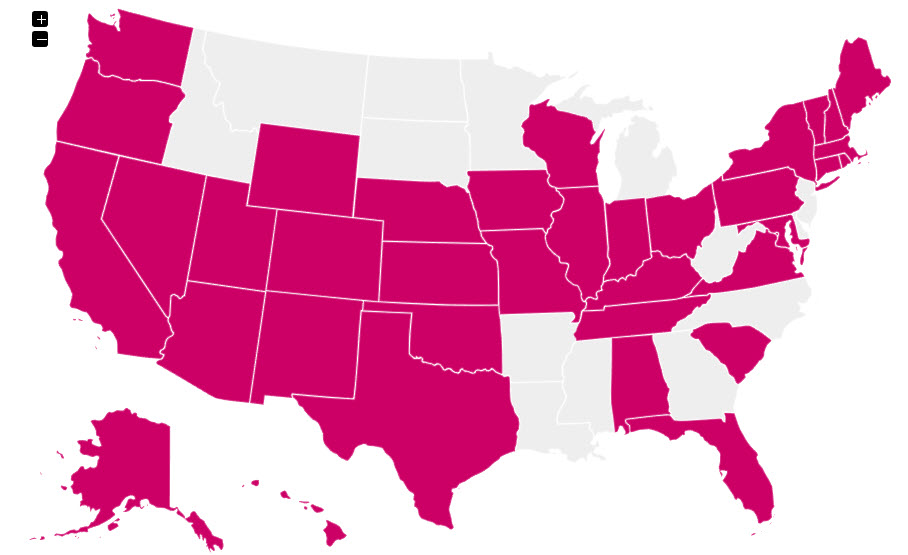
I've travelled to a few more places in North America recently.  Here's my updated map of US:


Friday, September 09, 2016

Limited lifespan of Habitable Zones around other stars [and a loosely held secret finally revealed about me]

Habitable zone around a red dwarf, image © Matthew Lorono, 2016
Habitable Zone around a Red Dwarf star
I've been fascinated by the idea of planets around other stars since I was young.  In fact, I developed several fictional solar systems, one of which became the basis for an online gaming and science fiction club.  That solar system is called Greeop System,[001]  which inspired the development of many more solar systems and formed the basis of many gaming and fictional story plots.[002]

At some point, I stumbled across the book Rare Earth: Why Complex Life Is Uncommon In The Universe (2000), which is one of the earliest sources that discusses the idea of Habitable Zones around stars.  

What's a Habitable Zone?  If a terrestrial planet orbits its sun at just the right distance, that sun provides the right amount of light and other energy to make life more likely, given several other factors.  If a planet is too close to its sun, it is likely too hot.  If a planet is too far from its sun, it is likely too cold.  This is why Habitable Zones are sometimes called Goldilocks Zones, in reference to the fairy tale Goldilocks and the Three Bears and finding options that are "just right" between two extremes.

In the past decade, the concept of Habitable Zone has been refined.  From the study Habitable Zone Lifetimes of Exoplanets around Main Sequence Stars, it is now often defined similar to,
...the circumstellar distance at which surface temperatures allow liquid water to be present on the planet’s surface, assuming variable H2O/CO2/CH4 greenhouse forcings.  The Habitable Zone has a minimum and maximum extent, forming inner (closer to the star) and outer boundaries that are set in part by biogeochemical climate feedback mechanisms and stellar luminosity.[003]
Yeah, Goldilocks metaphor seems to get the point across easier.  The question is, what's "just right" for life?  Star size and age appear to play the substantial roles in setting the limits of a Habitable Zone.  Not only is the Habitable Zone different between large and small stars, it can move over the life-cycle of a star. For example, main sequence stars gradually output more energy over billions of years.  A planet that initially forms within the Habitable Zone of a young star might not remain in the Habitable Zone later in the star's life-span. It is predicted that our Sun will be so hot in 1.75B years, surface water will no longer be possible on Earth, presumably making life on Earth no longer sustainable.[003]

If a planet has the right conditions and resides within the Habitable Zone, life still has to appear and evolve in some sort of sequence.  Taking Earth as the only example we have,
... this stepwise progression began with the origin of life, continued through the transition from replicating molecules to RNA and then DNA [1B years after Earth formation], from prokaryotes to eukaryotes [1.5 to 2.5B yrs after Earth formation] and cell differentiation [3.5 to 4B yrs after Earth formation], and concluded with the final step from primate to human societies [4.54B years after Earth formation].[003]
However, if just one of these steps takes a lot longer, there is a drastically lessened chance of having enough time to develop intelligent life similar to humans; assuming the march toward more intelligent creatures is inherent to the process of evolution on different planets.  Different stars may also extend or reduce the time-frame within which life may appear and develop.  Larger stars will have short Habitable Zone lifespans.  Smaller stars, such as Red Dwarfs may have very long and stable Habitable Zone lifespans.

Of course, a lot of this is based on assumptions that life on other planets will resemble life that formed on Earth.  Maybe life of different kinds exist in the Universe.[004]  The rules may be different for different kinds of life.  Maybe Earth is extremely unusual. Worse, maybe we will not be able to immediately recognize other forms of life simply because it is so different from our experience.  As more information is gathered, these issues will hopefully be addressed.

Pirmary reference:
Andrew J. Rushby, Mark W. Claire, Hugh Osborn, and Andrew J. Watson. Astrobiology. September 2013, 13(9): 833-849. doi:10.1089/ast.2012.0938, Habitable Zone Lifetimes of Exoplanets around Main Sequence Stars.

Response:
Voat.co

Friday, January 16, 2015

It finally happened

Its Trouble blog is 13 years old.  It had one major facelift in 2002, just before Blogger.com's buyout by Google (2003).  Its Trouble has had a subtle renaming; I had to remove the apostrophe in "It's" because it was bad for linking.  As a result, the name looks fine, but has a drastic typo that should bug me more than it really does.

The 2002 facelift for Its Trouble was created by Jennifer Szabo, who has since renounced all things webdesign.  The design of pretty cool for its time.  It was certainly unique, with the curled parchment theme.  I had my website loaded up with services, custom pages, and moderately useful functionality.  Everything worked nicely.  However, as time went on, stuff stopped working as old services went away and external websites died off.  For example, there are a lot of really good comments on my early posts which are lost due to the original comment service going away.  I was not able to maintain the overall website because Google shutdown FTP access for blogspot accounts, only allowing me to edit my home page.  As a result, I have several dead pages which I will never be able to change or remove.  Images, services, and weblinks stopped working on these pages many years ago.  Its Trouble has been on a slow decline in terms of presentation, all the while having new content with 1000+ posts.

Well, I finally bit the bullet.  I embraced the new Blogger.com stuff and updated my website with the biggest facelift in over a decade.  The problem with Blogger.com is that everything is canned.  You have only so many layout styles, and only so many templates, and only so many useful widgets.  It is way more limited than Wordpress.

Even still, the new design is cleaner.  There's noting broken.  Its functionality is limited to the bare basics allowed by Blogger.com. I was able to keep a similar color scheme and background image as before. It's not half bad.    I'm fairly happy with the result, if not a little disappointed that I cannot do much more.

Use in good health!

Tuesday, October 01, 2013

Valuable lesson from my first professional job, or how much is a brownie point worth?

My first professional job was in Silicon Valley for a laser company.  My boss was Bob.  Based on my take of things, Bob was stereotypical for a guy named "Bob" in the professional realm.  I'll just leave that to your imagination.  Anyway, Bob was wise and taught this young pup a few lessons.  One that has proven exceptionally valuable is the concept of brownie points.

Brownie points are earned one at a time for doing someting that impresses the boss.  The first time I earned a brownie point for being cleaver (I can't even remember what about), Bob said to me something along the lines of,
Congraluations!  You've earned one brownie point.  It takes 1000 to cancel-out one "Oh Shit".


There it was; the formula that explained everything that happens on the job. 

1000b = 1M 

Do something impressive and you get quick praise "b".  Make one mistake big "M" and you are in trouble no matter how much good you've done.  Unlike your 401K, brownie points don't carry over from job to job either.  Get a new job - start over.  I hope this helps! :)

Tuesday, May 21, 2013

New England Condo Expo

I am on the Board of Trustees for the condo association that governs the community in which I own my home.

Today, I attended the New England Condo Expo at the Seaport World Trade Center in Boston, MA.  The convention was surprizingly crowded with a lot of vendors, including condo management, painting, gardening, insurance, pavers and high-end locksmiths to name just a few.  The swag was great, including some high-end items like cooler bags, water bottles, tons of pens and various tools; not to avoid mentioning the motherload of candy and baked goods.

I attended a very informative seminar about the "Good, Bad and the Ugly" of condo association challenges.  A panel of three lawyers discussed various issues, such as the recent legalization of medicinal marijuana and how that might affect communities, handling discord on a Board of Trustees, current legislation being proposed this year and how that might impact condo contracts, addressing rules for attending board meetings from a remote location via online, and recent changes in law that prevent local governments from banning specific breeds of dogs.  The information was valuable, but of course, if any of these situations arise, legal council would still be preferred in many cases.  Even still, this seminar made was worth the trip into the heart of Boston.